The FNIP community will explore
- state of the art studies and data on neural functional activity and their underlining mechanisms at synaptic, circuit and behavioral levels
- how to perform neural activity analysis
- which are the open challenges/solutions for functional neuro-images segmentation
- which deconvolution methods can be adopted to improve the information extraction from neuro-image analysis
- how to study the co-variance of the spatial and temporal neural activity
- which are the current artifacts correction approaches
- which are the open challenges/solutions related with big dataset acquisition and analysis
- how to benchmark functional imaging methods
1st FNIP seminar |T3
Approaches for Image processing in biophysics and neuroscience
Image processing methods are a family of algorithms developed to extract and analyze features of interest from digital images. Thanks to recent technological developments in the field of neuro-imaging, we can now record from tens of thousand neurons with subcellular precision at high speed for prolonged periods while the animal is engaged in some behavioral task.
The traditional manual data curation is therefore no longer affordable particularly in the context of closed-loop approaches in which the neurophysiological readout must be available during the data acquisition session in order to guide for example optogenetic manipulations or behavioral interventions. Several excellent tools designed for automatic or semi-automatic data processing, are available, and in the context of this FNIP-T3 event we will discuss about 3 popular approaches with 3 experts in the field.
Together we will learn about key features, advantages and weakness of each method, with the aim to provide participants with useful information and start a discussion in the FNIP community, promoting future improvements on this critical topic.
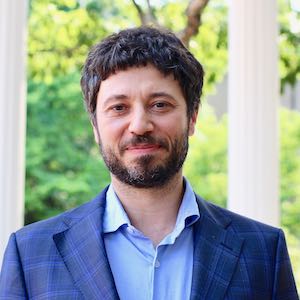
Dr. Giovannucci obtained his PhD from the Artificial Intelligence Research Institute of Barcelona. His postdoctoral work spanned computational neuroscience, neuroprosthetics, and experimental neuroscience at Princeton University and Pompeu Fabra University. Dr. Giovannucci subsequently took on a data scientist position at the Flatiron Institute (Simons Foundation) to develop machine learning algorithms and open-source software for the analysis of calcium imaging data. Dr. Giovannucci is currently an Assistant Professor in Neural Engineering at the UNC/NCSU department of Bioengineering, the Closed-loop Engineering for Advanced Rehabilitation center (CLEAR) and the UNC Neuroscience Center. The current research interests of the laboratory he leads focus on the analysis of biomedical and neuroscience imaging data, including calcium and voltage imaging at cellular level. Dr. Giovannucci is a Beckman Young Investigator, and formerly was a New Jersey Commission on Brain Injury Research and a Juan de la Cierva postdoctoral fellow. His research is funded by the Chan Zuckerberg Initiative, The Kavli foundation, NIH and the Beckman Foundation.
LINKS:
Caiman: https://github.com/flatironinstitute/CaImAn
CaImAn documentation: https://caiman.readthedocs.io/en/master/
TITLE: Neuro-image segmentation and real-time data processing
ABSTRACT: Optical microscopy methods such as calcium and voltage imaging already enable fast activity readout (30-1000Hz) of large neuronal populations using light. However, the lack of corresponding advances in online algorithms has slowed progress in retrieving information about neural activity during or shortly after an experiment. This technological gap not only prevents the execution of novel real-time closed-loop experiments, but also hampers fast experiment-analysis-theory turnover for high-throughput imaging modalities. The fundamental challenge is to reliably extract neural activity from fluorescence imaging frames at speeds compatible with new indicator dynamics and imaging modalities. To meet these challenges and requirements, we propose a framework for Fluorescence Imaging OnLine Analysis (FIOLA). FIOLA exploits computational graphs and accelerated hardware to preprocess fluorescence imaging movies and extract fluorescence traces at speeds in excess of 300Hz on calcium imaging datasets and at speeds over 400Hz on voltage imaging datasets. Additionally, we present the first real-time spike extraction algorithm for voltage imaging data. We evaluate FIOLA on both simulated data and real data, demonstrating reliable and scalable performance. Our methods provide the computational substrate required to precisely interface large neuronal populations and machines in real-time, enabling new applications in neuroprosthetics, brain-machine interfaces, and experimental neuroscience. Moreover, this new set of tools is poised to dramatically shorten the experiment-data-theory cycle by providing immediate feedback on the activity of large neuronal populations at experimental time.
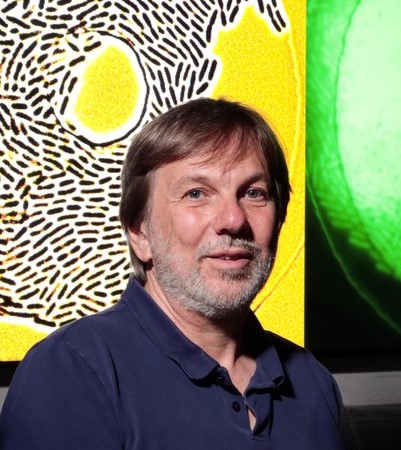
Daniel Sage was born in Annecy, France. He received the Master degree and Ph.D. degrees in signal and image processing from the Institut National Polytechnique de Grenoble INPG, France. He did his research Ph.D. thesis at the GIPSA laboratory (previously TIRF) on tracking methods. From 1989 to 1998, he was a Consulting Engineer developing vision systems for quality control, then Head of the Industrial Vision Department of Attexor S.A. During his career, he has developed some vision systems oriented to the quality control in the industrial sector. In 1998, Daniel Sage joined the Biomedical Imaging Group (BIG) of the Prof. M. Unser at Ecole Polytechnique Fédérale de Lausanne (EPFL) as responsible of the Head of the Software Development. He is currently in charge of the support to the researchers of the laboratory and also to the research community of the EPFL Center for Imaging. He is involved in numerous research projects in computational bioimaging including super-resolution microscopy, tracking, deconvolution, and image quantification. He is engaged in the open-source software development for the life science community, using both engineering and machine learning methods. He is also involved in the teaching of image processing and image analysis, including the development of methods for computer-assisted teaching.
LINKS:
DeepImageJ: https://github.com/deepimagej/deepimagej-plugin
TITLE: MICROSCOPY IMAGE ANALYSIS – THE SHIFT TO DEEP LEARNING?
ABSTRACT: The quantification of microscopy images require automatic tools to extract relevant information from complex data. To tackled this task, numerous image analysis algorithms have been designed, commonly based on prior knowledge and on physical modeling. However, the recent success of the deep learning (DL) in computer science have drastically changed the bioimage analysis workflows to a data-centric paradigm. While this DL technology remains relatively inaccessible to end-users, recent efforts has been proposed to facilitate the deployment of DL for some bioimage applications through new open-source software packages. Here, we present a set of open-source and user-friendly tools that allows to test DL models and to gain proficiency in DL technology: the centralized repository of bioimage model (Bioimage Model Zoo), the ready-to-use notebooks for the training, and the plugin deepImageJ that can run a DL model in ImageJ. We provide also good practice tips to avoid the risk of misuses. We address some practical issues such as the availability of massive amount of images, the understanding of generalizability concept, or the selection of the pre-trained models. The shift to deep learning also questions the community about the trust, the reliability and the validity of such trained deep learning models.

Carsen Stringer is a group leader at HHMI Janelia Research Campus. She did her PhD work at University College London on computational neuroscience, and her postdoc at Janelia. She develops tools for cellular segmentation, understanding high-dimensional visual computations and neural representations of behavior.
LINKS:
Suite2p: https://github.com/MouseLand/suite2p
Cellpose: https://github.com/MouseLand/cellpose
TITLE: ANALITICAL AND FUNCTIONAL ALGORITHMS FOR CELLULAR SEGMENTATION
ABSTRACT: Many biological applications require the segmentation of cell bodies, membranes and nuclei from microscopy images. We therefore developed a generalist, deep learning-based segmentation algorithm called Cellpose, which can very precisely segment a wide range of image types out-of-the-box and does not require model retraining or parameter adjustments. Additionally, many scientists acquire functional imaging data of neural activity. We developed Suite2p, a functional segmentation algorithm, that performs well on a variety of functional imaging data. We will cover how each of these segmentation algorithms work, and the various circumstances where each algorithms perform well.

Sebastiano Curreli got his master’s degree in medical and pharmaceutical biotechnology at university of Genoa in 2011. In 2015 he obtained his doctoral degree in Neuroscience and Brain Technology from the University of Genoa working at the Italian Institute of Technology (IIT) under the supervision of Prof. Alexander Dityatev, working on the optimization of strategies for direct reprogramming of glial cells to neurons. Then he joined Prof. Dityatev at the German center for neurodegenerative diseases (DZNE) in Magdeburg, Germany. Since 2016 he is a member of the Optical Approaches to Brain Function lab led by Tommaso Fellin at the IIT where he investigates the basic processes underlying information encoding in the brain focusing on the role of non-neuronal circuital elements in spatial information encoding.
TITLE: Investigating information encoding in the brain beyond neural cells
ABSTRACT: In the hippocampus, place cells encode spatial information restricting their spikes at specific locations providing a cellular substrate for spatial cognition. Whether spatial information encoding extends beyond neuronal circuits is currently unknown. We used simultaneous two-photon calcium imaging of astrocytes and neurons in the CA1 hippocampal area of mice navigating in a virtual environment to demonstrate that astrocytic calcium signals actively encode information about the animal’s position. Calcium signals carrying spatial information occurred in topographically-organized regions of the astrocyte, including the cell body and the proximal processes. Moreover, the spatial information encoded in the astrocytes was complementary and synergistic to that carried by neurons, improving decoding performance when considering astrocytic signals in addition to neuronal signals. These results reveal a novel level of spatial information encoding in the hippocampal circuitry where non-neural elements constitute an additional reservoir of spatial information, which complements that encoded in the firing activity of CA1 neurons and expands population-coding capacity of hippocampal networks.