Fluorescence microscopy reveals the structure and function of specific players within and between cells with an optical and live-compatible approach.
A central challenge of modern neuroscience is to correlate external stimuli and behavior with the activity and location of individual neurons within a large brain volume. Indeed, a simultaneous study of both organism behaviour and brain activity is critical to characterize circuit alterations underlying neurological disorders and to assess potential attenuation strategies. Optical-imaging of the neuronal activity has become a groundbreaking approach in neuroscience for in vivo access, recording and mapping of the neural response as well as behaviour studies. Moreover, recent technological advancements have shown that optical-microscopy can be efficiently combined with electron microscopy to correlate the functional fluorescence neuronal response with enhanced spatial information. Indeed, correlative 3D light-electron microscopy nowadays enables identifying fluorescent structures at the ultrastructural level in brain samples. However, studying large brain volume with both high spatial and temporal resolution and in deep structure, remains an open challenge both at hardware and software level. During the FNIP events we will investigate how fluorescence techniques are supporting advancing in neuroscience
Custom-address serial holography for the measurement of spike correlations between neurons in mouse visual cortex

Laurent Bourdieu has completed his PhD at the age of 24 years from the Université Pierre et Marie Curie, Paris. During his postdoctoral studies at Princeton and Rockefeller Universities he studied the biophysics of motor proteins. He is currently a CNRS researcher and head of the team “Cortical Dynamics and Coding Mechanisms” at IBENS, Ecole Normale Supérieure, Paris. He studies cortical dynamics during complex behavioral tasks and in particular the modulation of sensory integration by selective attention or sensory-motor expectancy. To address these questions, he designs innovative two-photon microscopy methods, including adaptive optics, wavefront shaping and fast random-access scanning using acousto-optic deflectors.
ABSTRACT: Custom-address serial holography (CASH) is a new method based on fast acousto-optic modulation for optical recording of neuronal activity in 3D at high speed in-vivo. CASH allows random address sampling of 20 cells at 1 kHz up to 200 cells at 0.1 kHz in head-fixed behaving mice across a volume of (500 µm)3. 3D-CASH recordings of GCaMP6f expressing neurons in layer 2/3 and 5 of mouse primary visual cortex in response to moving contrast gratings reveal the layered organization of the cortex, in the structure of the neuron pairwise correlation matrix. Following the stimulus temporal periodicity, the response spike rate features phasic (R1) and non-phasic component (R0); R1/R0 values show a weak bimodality resembling the transition between non-phasic neurons to phasic neurons with complex and simple receptive fields. Our data validate 3D-CASH as a method for assessing neuronal activity in 3D-distributed cortical circuits at high sampling rate.
[1] Akemann W, Wolf S, Villette V, Mathieu B, Tangara A, Fodor J, Ventalon C, Léger JF, Dieudonné S, Bourdieu L. Fast optical recording of neuronal activity by three-dimensional custom-access serial holography. Nat Methods. 2022 Jan;19(1):100-110. [2] Fast wavefront shaping for two-photon brain imaging with large field of view correction. Blochet B, Akemann W, Gigan S, Bourdieu L, bioRxiv 2021.09.06.459064. [3] Akemann W, Léger JF, Ventalon C, Mathieu B, Dieudonné S, Bourdieu L. Fast spatial beam shaping by acousto-optic diffraction for 3D non-linear microscopy. Opt Express. 2015 Nov 2;23(22):28191-205.
Developing new tools for imaging network dynamics in freely behaving animals
 Daniel Aharoni is currently an Assistant Professor in the Department of Neurology at the University of California, Los Angeles. He received his Ph.D. in Physics from the University of California, Los Angeles, where he worked in high and low energy particle physics before shifting focus to neurophysics. Dr. Aharoni stayed at UCLA for a postdoctoral fellowship under Drs. Baljit Khakh, Alcino Silva, and Peyman Golshani, where he spearheaded the technical development of the open-source UCLA Miniscope Project. Dr. Aharoni’s lab lies at the intersection of engineering, neuroscience, and physics. Specifically, his lab focuses on applying tool development methodologies from engineering and physics to address current challenges in neuroscience and medicine. At the center of the Aharoni lab’s research are three main goals: (i) contribute to understanding circuit level neurological function, (ii) bridge the gap between specialized tool design and the intricacies of modern neuroscience, and (iii) promote equitable access to transformative tools and techniques in neuroscience.
ABSTRACT: One of the biggest challenges in neuroscience is to understand how neural circuits in the brain process, encode, store, and retrieve information. Meeting this challenge requires tools capable of recording and manipulating the activity of intact neural networks in freely behaving animals. Head-mounted miniature fluorescence microscopes are among the most promising of these tools. Taking advantage of the past decade of advancements in fluorescent neural activity reports, these microscopes use wide-field single photon excitation to image activity across large populations of neurons in freely behaving animals. They are capable of imaging the same neural population across months and in a wide range of different brain regions. The UCLA Miniscope Project — an open-source collaborative effort– aims at accelerating innovation of miniature microscope technology while also extending access to this technology to the entire neuroscience community. Currently, we are working on advancements ranging from optogenetic stimulation and wireless operation to simultaneous optical and electrophysiology recording.
Investigating juvenile parkinsonism by two-photon imaging and electrophysiology of patient-derived midbrain organoids.

Mario Bortolozzi received the master’s degree in physics from the University of Padua (Italy) in 2004 and the Ph.D. degree in Neurobiology at the School of Biosciences of the same university in 2008. In 2012-2013 he was visiting scientist at the Department of Physiology, Anatomy and Genetics of the University of Oxford, UK. Since 2017, he is an Associate Professor in Biophysics at the Department of Physics and Astronomy “G. Galilei” of the University of Padua. Mario Bortolozzi’s research group is placed at the Veneto Institute of Molecular Medicine (VIMM, Padova) where he combines expertise from advanced optical microscopy, electrophysiology, and systems biology to answer important biological questions. The lab is currently focusing on the molecular pathogenesis of the X-linked Charcot-Marie-Tooth peripheral neuropathy (CMT1X) and Parkinson’s disease using in vitro 2D and 3D models. Mario Bortolozzi is co-author of 43 publications, including 32 original articles (average IF: 7.9; H-index Scopus: 20).
ABSTRACT: One of the most exciting advancements in stem cell research of the last few years has been the development of human brain organoids. This in vitro system consists of multiple cell types that can self-organize in three-dimensions representing a brain region able to recapitulate physiological and pathological relevant aspects. Compared to animal models, patient-derived organoids provide emerging prospects for precision medicine. In this work, we investigated the neuronal functionality of human midbrain organoids (hMOs) derived from healthy subjects and patients carrying autosomal recessive juvenile parkinsonism (ARJP) caused by mutations of the PARK2 gene, which codes for the parkin protein. Two-photon Ca2+ imaging combined with patch-clamp and multielectrode arrays (MEAs) recordings highlighted a coordinated oscillatory neuronal activity in healthy hMOs, which was altered in mutant organoids due to overexpression of the kainate receptor resulting from modified ubiquitination by parkin.
Two-photon brain imaging in an alternative animal model, how to correlate neuronal activity and behaviour data
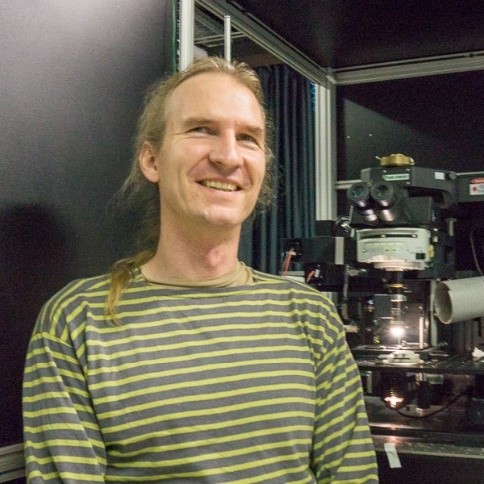
Albrecht Haase graduated in physics from the Free University of Berlin, Germany, and received a PhD in physics from the University of Heidelberg, Germany. After a postdoc at the Institute of Photonic Sciences (ICFO), Barcelona, Spain he joined the University of Trento, Italy. He is currently an Associate Professor of Applied Physics and head of the Laboratory of Biophotonics and Neurophysics at the Department of Physics and the Center for Mind/Brain Sciences (CIMeC) in Trento. His research interests focus on fundamental processes in neurons and neuronal networks, including quantum biological phenomena, and optical methods for their investigation in insect models, like multi-photon calcium imaging and optogenetics. More details on https://r.unitn.it/en/cimec/nphys or @NeurophysicsT
ABSTRACT: The honey bee is a species that outperforms other insects and even some of the standard mammalian animal models in its cognitive abilities and broad behavioural spectrum. A brain of a size that allows complete access by two-photon microscopy enables the study of an enormous variety of fundamental neuronal processes. Examples will be presented of experiments showing how to correlate functional calcium imaging results with behavioural data to investigate basic mechanisms underlying olfaction, mechanosensation, or sleep.
Paoli M, Andrione M, Haase A (2017) Imaging Techniques in Insects. In: Lateralized Brain Functions: Methods in Human and Non-Human Species, 1st ed. (Rogers LJ, Vallortigara G, eds), pp 471–519. New York, NY: Springer New York.
Imaging function, connectivity, and synaptic architecture in cortical circuits

Dr. Federico Rossi trained in neurobiology at Scuola Normale Superiore (Pisa, 2012) and completed his doctorate in Neuroscience at University College London, sponsored by a Wellcome Trust Studentship (UCL, 2018). During these studies, Federico pioneered strategies to record the activity of cortical neurons in vivo simultaneously with their connectivity and synaptic architecture. Working jointly in the Kullmann and Carandini labs, he applied these methods to investigate the pathways of propagation of focal cortical seizures (Rossi et al, 2017, Nat Commun). Then, in the Carandini-Harris lab, he focused on mapping the visual circuits underlying image and motion processing in the cortex (Rossi et al, 2020, Nature). Federico currently investigates the neural circuits orchestrating sensory-motor computations in the neocortex and in the cerebellum funded by a Sir Henry Wellcome Fellowship in the Häusser lab (UCL, 2021).
ABSTRACT: I will first present my recent discovery of novel cortical circuits underlying the processing of shapes and motion in the primary visual cortex. In this work, I will describe how to combine two-photon multispectral imaging and single-neuron initiated monosynaptic tracing to record simultaneously the activity and the connectivity of cortical circuits. I will follow up presenting unpublished work revealing that these patterns of connectivity are mirrored in the functional specialisation of the dendrites of cortical neurons. I will describe methods to image neurotransmitter release at individual dendritic synapses, and how to causally test the role of dendrites with two-photon optical pruning.
[1] Spatial connectivity matches direction selectivity in visual cortex
Tripartite synapses: Astrocyte regulation of synaptic function, network activity and animal behavior.

Alfonso Araque obtained his PhD degree in 1993 in Biological Sciences at Universidad Complutense de Madrid. He did his postdoctoral research with Dr. Washington Buño at the Cajal Institute in Madrid from 1993 to 1996, and later with Dr Phil Haydon at the Iowa State University from 1996 to 1999. He established his first independent laboratory in 2001 at the Cajal Institute in Madrid, Spain, where he continued to study the properties and mechanisms of the reciprocal communication between neurons and astrocytes. He is currently Professor in the Department of Neuroscience at the University of Minnesota since 2013. He has been Vice-President of the Spanish Society of Neuroscience (2011-2013), President of the Spanish Glia Network (2013-2020), he is Member of Academia Europaea (since 2010) and the Academy for Excellence in Health Research at University of Minnesota since (2020). He is recipient of the Medical School’s Wall of Scholarship at University of Minnesota (2016) and the Pfizer Foundation Award (2008). He has authored 94 scientific publications. He has been given more than 108 Invited Lectures in International Universities and Research Centers.
ABSTRACT: I will present and discuss current evidence regarding the mechanisms and functional consequences at synaptic, circuit and behavioral levels of the bidirectional astrocyte-neuron signaling in different brain areas. Specifically, I will present results indicating: 1) the ability of nucleus accumbens astrocytes to respond to the neuromodulator dopamine, to mediate the dopamine-evoked synaptic regulation and to mediate the behavioral effects of the psychostimulant amphetamine; 2) the ability of cortical astrocytes to sense sensory information and to regulate neuronal cortical activity; 3) the ability of astrocytes to regulate synaptic transmission in the amygdala and the amygdala-associated fear responses. I will discuss how this evidence supports a paradigm shift in our understanding of the cellular basis of brain function, which would result not solely from the neuronal activity, but from the coordinated activity of astrocytes and neurons.
Astrocytes, guardians of critical period plasticity in the visual cortex

Nathalie Rouach is a neurobiologist developing research on the role of glial cells in brain physiology and pathologies. She is a Director of Research at Collège de France, Paris. She received in 2002 her Ph.D. in Neuroscience, performed jointly at University Pierre and Marie Curie and the Weizmann Institute, where she studied the contribution of astrocytic gap junctional communication to neuroglial network interactions. She then joined the laboratory of Roger Nicoll at University of California San Francisco as a postdoc, where she worked on glutamate receptors trafficking and synaptic plasticity. She now runs the laboratory « Neuroglial Interactions in Cerebral Physiopathology and Pathologies » within the Interdisciplinary Center for Research in Biology at the Collège de France. Her research aims at determining whether and how astrocytes play a direct role in information processing. In particular, her team explores the molecular modalities and functional consequences of neuron‐glia interactions in various physiological and pathological contexts, such as memory, social interactions, epilepsy or intellectual disability, with ex vivo and in vivo studies of neuronal excitability, synaptic transmission and plasticity, synchronization of neuronal networks, and cognitive functions in mouse models or human tissues. She is a member of several scientific councils and has received several awards including the Human Frontier Career Development award, Silver Medal of the City of Paris and ERC Consolidator grant. She is the author of 80 publications in peer‐reviewed journals.
ABSTRACT: Brain postnatal development is characterized by critical periods of experience-dependent remodeling. Termination of these periods of intense plasticity is associated with settling of neuronal circuits, allowing for efficient information processing. Failure to end critical periods thus results in neurodevelopmental disorders. Yet, the cellular processes defining the timing of these developmental periods remain unclear. Here I will present data showing in the mouse visual cortex that astrocytes control the closure of the critical period. We uncovered a novel underlying pathway involving regulation of the extracellular matrix that allows interneurons maturation via an unconventional astroglial connexin signaling. Our results thus demonstrate that astrocytes not only influence activity and plasticity of single synapses, but are also key elements in the experiencedependent wiring of brain developing circuits.
Multimodal optical microscopy, from fluorescence to label-free
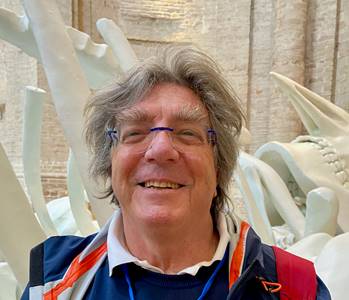 Alberto Diaspro is Full Professor of Applied Physics at Department of Physics of Genoa University (UNIGE), Research Director in Nanoscopy at the Istituto Italiano di Tecnologia (IIT), Affiliate researcher at the Institute of Biophysics (IBF) of the National Research Council (CNR), Full Academic of the Ligurian Academy of Sciences and Humanities. On 2014 Toshiuki Masai, President Nikon Instruments, Japan, designed AD as Director of the Nikon Imaging Center at IIT. He was Deputy and Department Director at IIT (2009-2019), President of OWLS, EBSA and ICO Appointed Vice President. AD specific research experience is related to the design, realization and utilization of optical and biophysical instrumentation applied to molecular oncology (chromatin, endocytosis and adhesion mechanisms), neuroscience (brain mapping and neuronal network signalling) and smart materials (intelligent drug delivery and nanocomposite materials). AD designed and realised the 1st italian CIDS spectrometer (1987), the 1st italian multiphoton microscope (1999) and a hybrid artificial “nanobiorobot” (2000-2005). He directed the design and realisation of the 1st Italian nanoscopy architecture at IIT (2008). Among the international developments, AD introduced key methods in optical and correlative microscopy, namely: Circular Intensity Differential scattering (CIDS) label-free to study chromatin-DNA organization coupled with super resolution, individual molecule localization at single molecule level coupled with selective plane illumination microscopy (IML-SPIM) to study thick objects like cancer aggregates, single wavelength two-photon stimulated emission depletion microscopy (SW-2PE-STED), two-photon activation and switching of engineering green fluorescent proteins and correlative nanoscopy (AFM-STED). AD is co-founder of the start-up “Genoa Instruments,” the first Italian company devoted to developing super resolved optical microscopes based on the coupling of image scanning microscopy and single photon detection arrays. AD published more than 400 papers, 17000 citations, H=61 (source Google Scholar). AD received the Emily M.Gray Award for mentoring in Biophysics in 2014 and the Award for Scientific Communication by the Italian Physical Society in 2019. AD designed and organized the scientific exhibition “Beyond Science” and “Pop Microscopy”, that was also used as testimonial for the 500 years of Leonardo at the Italian Embassy in USA, Washington DC. AD received the Gregorio Weber Award on 2022 for excellence in studies, theory and application of fluorescence.
ABSTRACT: Multimodal optical microscopy is a growing attitude boosted by artificial intelligence. In the era of super-resolved fluorescence microscopy, early predicted by Toraldo di Francia, fluorescence plays a significant role, including its photochemical parameters, from brightness to lifetime. Non-linear approaches, like two-photon excitation microscopy, pushed towards label-free imaging exploiting intrinsic fluorescence and SHG/THG. In this framework, polarization methods like Mueller matrix microscopy expand those contrast mechanisms available for imaging. An image scanning approach, the use of white lasers and the ability of single photon counting are the pivotal elements for the development of a multimodal microscope. An interesting case study is related to understanding the role of chromatin remodelling in physiological/pathological processes.
[1]. Le Gratiet A., Lanzano L., Bendandi A., Marongiu R., Bianchini P., Sheppard C.J.R., Diaspro A. (2021) Phasor approach of Mueller matrix optical scanning microscopy for biological tissue imaging. Biophysical J. 120:1-14. [2]. Castello M., Tortarolo G., Buttafava M., Deguchi T., Villa F., Koho S., Pesce L., Oneto M., Pelicci S., Lanzano L., Bianchini P., Sheppard C., Diaspro A., Tosi A., Vicidomini G. (2019) A robust and versatile platform for image scanning microscopy enabling super-resolution FLIM. Nat. Meth.6 (2): 175-178.
Multiple Routes to 3D Imaging – Combining Information from Different Microscopy Modalities
 Kristin Grußmayer is an assistant professor at the Department of Bionanoscience, TU Delft and the Kavli Institute of Nanoscience Delft. She studied Physics at Heidelberg University with a specialization in Biophysics. As the Heidelberg-Cornell fellow and with support from the Fulbright program, she spent a year at Cornell University. She carried out her Diploma and doctoral thesis work in the Institute for Physical Chemistry & CellNetworks Cluster of Excellence at the BioQuant Center in Heidelberg; during her doctoral studies she was as a fellow of the DFG graduate college GRK 1114. She worked on transcription factor DNA biosensors and established a method for counting molecules based on photon statistics for quantification in biological systems and material science. After her PhD in Physics (summa cum laude), she moved to Switzerland for a postdoc at the École Polytechnique Fédérale de Lausanne (EPFL). As a Horizon 2020 Marie Sklodowska-Curie fellow, she became an expert in multiplane super-resolution and quantitative phase imaging and collaborated with neurobiologists. Since 2021, she leads an independent research group at TU Delft. Her lab develops multimodal microscopy and analysis tools, establishes new classes of fluorescence probes, and applies them to address relevant questions in molecular and cell biology. She is also one of the founders of the TU Delft AI Lab Biomedical Interventions Optimization Lab.
ABSTRACT: All fluorescence super-resolution microscopy techniques present trade-offs, for example between resolution, acquisition speed and live-cell compatibility. Here, we exploit the synergy between super-resolution optical fluctuation imaging (SOFI) and self-blinking fluorophores for 2D imaging with up to 50-60nm resolution and for 3D imaging covering up to 10um depth [1,2]. We use two strategies for 3D imaging: an image-splitting prism for simultaneous multiplane acquisition [1] and remote focusing via adaptive optics [2]. SOFI is an alternative to localization microscopy that analyzes spatio-temporal fluctuations in fluorescence by calculating higher-order cumulants, a quantity related to correlations. The method is less demanding in terms of fluorophore photoswitching and brightness, offering better time resolution and lower phototoxicity at the cost of a more moderate resolution gain. I will furthermore show how we combine the fluorescence-based molecule specific information with label-free 3D imaging to acquire complementary information e.g. about the topology of cells (scanning-ion conductance microscopy (SICM) [3]) and their morphology and dry mass (quantitative phase imaging [4]). I will conclude by giving an outlook on how we apply this combination of imaging techniques to study neurodegenerative disease.
Look Deeper with Nikon AX-R Multiphoton Microscope System

Giacomo Cozzi got his MSc in Biology (2001), Faculty of Biology at the University of Florence, Italy. After a Post-Graduate work at the Department of Biochemistry of the University of Florence, Italy (2001-2002), Dr G. Cozzi got his PhD degree in “Biochemistry and Applied Biology” at the Department of Biochemistry of Florence with the tutorship of Prof. Paola Chiarugi (2005). In 2006, he did a Post-Doc at the Center for Nuclear Magnetic Resonance (CERM) of Polo Scientifico Universitario, Sesto Fiorentino, Italy. In 2006-2007 he worked as a Service Technician at Focus Spa (Nikon Italy Service Company). Since 2008, Dr. Cozzi is employed as “Product Specialist” for Nikon Instruments Spa (Italian subsidiary of Nikon Instruments Corporation) with main responsibility in High-End Microscopy and Image Analysis. From 2021 he works as an Application Specialist for the Nikon Products in Nikon Europe BV taking care of all High End microscopy including Confocals, Timelapse, Multiphoton and Advanced Imaging.
ABSTRACT: We will present the new microscope platform dedicated to Multiphoton acquisition. The new system based on the Confocal scanhead AX-R features an improved FOV of 22mm in Multiphoton acquisition, two new upright stands for customized in vivo experiment with expanded free space under the objective, new resonant scanner with high resolution, high sensitive GaAsP NDD detector and new dedicated optics.
Modular Microscopy Systems for Single Molecule Imaging
Ferdinando Ciceri is at  core a proactive and attentive Application Engineer with a successful track record in advising scientific equipment integration purchase and offering punctual technical support. His areas of expertise are motion control for nanopositioning and advanced microscopy techniques where closed loop piezo stages are used: mainly scanning probe, super‐resolution and single molecule microscopy. After 18 years’ experience in technical sales for major producers in positioning and microscopy hardware he is enjoying at Mad City Labs a constant and deep involvement in the design and implementation of free space optics setups for TIRF and FRET microscopy experiments. Being in charge for the European market exposes him to a variety of applications on an international basis broadening his technical and cultural background.
ABSTRACT: Single molecule approaches to understanding biological processes present many unique challenges for microscopy systems that conventional microscope platforms were not designed to meet. These challenges can be grouped into 3 broad categories: 1) a greater need for open and flexible access to optical pathways; 2) more stringent requirements for precise control over sample position; and 3) the paramount importance for stability in the overall system.
To serve the important emerging needs of single molecule approaches, we have developed an open, modular, flexible, and extensible microscopy platform, which we call the RM21™. It is specifically designed to meet these challenges, while also making customization and innovation straightforward. Very importantly, we have leveraged our expertise in precise positioning in all aspects of this platform: the RM21™ is designed from the bottom up, with system stability firmly in mind, as well as full integration with an array of options for both micro‐ and nanopositioning stages. These design considerations enable precise and comprehensive control over sample positioning while maintaining overall system stability. We have also placed anchor points for cage‐system mounting of widely available optomechanical components at convenient positions throughout this platform, supporting flexibility and ease of design, assembly, and alignment of desired final systems. Finally, we have developed and integrated both focal and 3‐dimensional active drift‐compensation systems to address the stability needs of single molecule experiments. We demonstrate how this platform can be configured to support several specific single molecule methods, and provide examples of how it can be extended to support others. We also use single molecule imaging to examine the sample positioning capabilities of these systems, as well as their stability with and without active.
Fluorescence microscopy reveals the structure and function of specific players within and between cells with an optical and live-compatible approach.
A central challenge of modern neuroscience is to correlate external stimuli and behavior with the activity and location of individual neurons within a large brain volume. Indeed, a simultaneous study of both organism behaviour and brain activity is critical to characterize circuit alterations underlying neurological disorders and to assess potential attenuation strategies. Optical-imaging of the neuronal activity has become a groundbreaking approach in neuroscience for in vivo access, recording and mapping of the neural response as well as behaviour studies. Moreover, recent technological advancements have shown that optical-microscopy can be efficiently combined with electron microscopy to correlate the functional fluorescence neuronal response with enhanced spatial information. Indeed, correlative 3D light-electron microscopy nowadays enables identifying fluorescent structures at the ultrastructural level in brain samples. However, studying large brain volume with both high spatial and temporal resolution and in deep structure, remains an open challenge both at hardware and software level. During the FNIP events we will investigate how fluorescence techniques are supporting advancing in neuroscience
Custom-address serial holography for the measurement of spike correlations between neurons in mouse visual cortex
Laurent Bourdieu has completed his PhD at the age of 24 years from the Université Pierre et Marie Curie, Paris. During his postdoctoral studies at Princeton and Rockefeller Universities he studied the biophysics of motor proteins. He is currently a CNRS researcher and head of the team “Cortical Dynamics and Coding Mechanisms” at IBENS, Ecole Normale Supérieure, Paris. He studies cortical dynamics during complex behavioral tasks and in particular the modulation of sensory integration by selective attention or sensory-motor expectancy. To address these questions, he designs innovative two-photon microscopy methods, including adaptive optics, wavefront shaping and fast random-access scanning using acousto-optic deflectors.
ABSTRACT: Custom-address serial holography (CASH) is a new method based on fast acousto-optic modulation for optical recording of neuronal activity in 3D at high speed in-vivo. CASH allows random address sampling of 20 cells at 1 kHz up to 200 cells at 0.1 kHz in head-fixed behaving mice across a volume of (500 µm)3. 3D-CASH recordings of GCaMP6f expressing neurons in layer 2/3 and 5 of mouse primary visual cortex in response to moving contrast gratings reveal the layered organization of the cortex, in the structure of the neuron pairwise correlation matrix. Following the stimulus temporal periodicity, the response spike rate features phasic (R1) and non-phasic component (R0); R1/R0 values show a weak bimodality resembling the transition between non-phasic neurons to phasic neurons with complex and simple receptive fields. Our data validate 3D-CASH as a method for assessing neuronal activity in 3D-distributed cortical circuits at high sampling rate.
[1] Akemann W, Wolf S, Villette V, Mathieu B, Tangara A, Fodor J, Ventalon C, Léger JF, Dieudonné S, Bourdieu L. Fast optical recording of neuronal activity by three-dimensional custom-access serial holography. Nat Methods. 2022 Jan;19(1):100-110. [2] Fast wavefront shaping for two-photon brain imaging with large field of view correction. Blochet B, Akemann W, Gigan S, Bourdieu L, bioRxiv 2021.09.06.459064. [3] Akemann W, Léger JF, Ventalon C, Mathieu B, Dieudonné S, Bourdieu L. Fast spatial beam shaping by acousto-optic diffraction for 3D non-linear microscopy. Opt Express. 2015 Nov 2;23(22):28191-205.
Developing new tools for imaging network dynamics in freely behaving animals
Daniel Aharoni is currently an Assistant Professor in the Department of Neurology at the University of California, Los Angeles. He received his Ph.D. in Physics from the University of California, Los Angeles, where he worked in high and low energy particle physics before shifting focus to neurophysics. Dr. Aharoni stayed at UCLA for a postdoctoral fellowship under Drs. Baljit Khakh, Alcino Silva, and Peyman Golshani, where he spearheaded the technical development of the open-source UCLA Miniscope Project. Dr. Aharoni’s lab lies at the intersection of engineering, neuroscience, and physics. Specifically, his lab focuses on applying tool development methodologies from engineering and physics to address current challenges in neuroscience and medicine. At the center of the Aharoni lab’s research are three main goals: (i) contribute to understanding circuit level neurological function, (ii) bridge the gap between specialized tool design and the intricacies of modern neuroscience, and (iii) promote equitable access to transformative tools and techniques in neuroscience.
ABSTRACT: One of the biggest challenges in neuroscience is to understand how neural circuits in the brain process, encode, store, and retrieve information. Meeting this challenge requires tools capable of recording and manipulating the activity of intact neural networks in freely behaving animals. Head-mounted miniature fluorescence microscopes are among the most promising of these tools. Taking advantage of the past decade of advancements in fluorescent neural activity reports, these microscopes use wide-field single photon excitation to image activity across large populations of neurons in freely behaving animals. They are capable of imaging the same neural population across months and in a wide range of different brain regions. The UCLA Miniscope Project — an open-source collaborative effort– aims at accelerating innovation of miniature microscope technology while also extending access to this technology to the entire neuroscience community. Currently, we are working on advancements ranging from optogenetic stimulation and wireless operation to simultaneous optical and electrophysiology recording.
Investigating juvenile parkinsonism by two-photon imaging and electrophysiology of patient-derived midbrain organoids.
Mario Bortolozzi received the master’s degree in physics from the University of Padua (Italy) in 2004 and the Ph.D. degree in Neurobiology at the School of Biosciences of the same university in 2008. In 2012-2013 he was visiting scientist at the Department of Physiology, Anatomy and Genetics of the University of Oxford, UK. Since 2017, he is an Associate Professor in Biophysics at the Department of Physics and Astronomy “G. Galilei” of the University of Padua. Mario Bortolozzi’s research group is placed at the Veneto Institute of Molecular Medicine (VIMM, Padova) where he combines expertise from advanced optical microscopy, electrophysiology, and systems biology to answer important biological questions. The lab is currently focusing on the molecular pathogenesis of the X-linked Charcot-Marie-Tooth peripheral neuropathy (CMT1X) and Parkinson’s disease using in vitro 2D and 3D models. Mario Bortolozzi is co-author of 43 publications, including 32 original articles (average IF: 7.9; H-index Scopus: 20).
ABSTRACT: One of the most exciting advancements in stem cell research of the last few years has been the development of human brain organoids. This in vitro system consists of multiple cell types that can self-organize in three-dimensions representing a brain region able to recapitulate physiological and pathological relevant aspects. Compared to animal models, patient-derived organoids provide emerging prospects for precision medicine. In this work, we investigated the neuronal functionality of human midbrain organoids (hMOs) derived from healthy subjects and patients carrying autosomal recessive juvenile parkinsonism (ARJP) caused by mutations of the PARK2 gene, which codes for the parkin protein. Two-photon Ca2+ imaging combined with patch-clamp and multielectrode arrays (MEAs) recordings highlighted a coordinated oscillatory neuronal activity in healthy hMOs, which was altered in mutant organoids due to overexpression of the kainate receptor resulting from modified ubiquitination by parkin.
Two-photon brain imaging in an alternative animal model, how to correlate neuronal activity and behaviour data
Albrecht Haase graduated in physics from the Free University of Berlin, Germany, and received a PhD in physics from the University of Heidelberg, Germany. After a postdoc at the Institute of Photonic Sciences (ICFO), Barcelona, Spain he joined the University of Trento, Italy. He is currently an Associate Professor of Applied Physics and head of the Laboratory of Biophotonics and Neurophysics at the Department of Physics and the Center for Mind/Brain Sciences (CIMeC) in Trento. His research interests focus on fundamental processes in neurons and neuronal networks, including quantum biological phenomena, and optical methods for their investigation in insect models, like multi-photon calcium imaging and optogenetics. More details on https://r.unitn.it/en/cimec/nphys or @NeurophysicsT
ABSTRACT: The honey bee is a species that outperforms other insects and even some of the standard mammalian animal models in its cognitive abilities and broad behavioural spectrum. A brain of a size that allows complete access by two-photon microscopy enables the study of an enormous variety of fundamental neuronal processes. Examples will be presented of experiments showing how to correlate functional calcium imaging results with behavioural data to investigate basic mechanisms underlying olfaction, mechanosensation, or sleep.
Paoli M, Andrione M, Haase A (2017) Imaging Techniques in Insects. In: Lateralized Brain Functions: Methods in Human and Non-Human Species, 1st ed. (Rogers LJ, Vallortigara G, eds), pp 471–519. New York, NY: Springer New York.
Imaging function, connectivity, and synaptic architecture in cortical circuits
Dr. Federico Rossi trained in neurobiology at Scuola Normale Superiore (Pisa, 2012) and completed his doctorate in Neuroscience at University College London, sponsored by a Wellcome Trust Studentship (UCL, 2018). During these studies, Federico pioneered strategies to record the activity of cortical neurons in vivo simultaneously with their connectivity and synaptic architecture. Working jointly in the Kullmann and Carandini labs, he applied these methods to investigate the pathways of propagation of focal cortical seizures (Rossi et al, 2017, Nat Commun). Then, in the Carandini-Harris lab, he focused on mapping the visual circuits underlying image and motion processing in the cortex (Rossi et al, 2020, Nature). Federico currently investigates the neural circuits orchestrating sensory-motor computations in the neocortex and in the cerebellum funded by a Sir Henry Wellcome Fellowship in the Häusser lab (UCL, 2021).
ABSTRACT: I will first present my recent discovery of novel cortical circuits underlying the processing of shapes and motion in the primary visual cortex. In this work, I will describe how to combine two-photon multispectral imaging and single-neuron initiated monosynaptic tracing to record simultaneously the activity and the connectivity of cortical circuits. I will follow up presenting unpublished work revealing that these patterns of connectivity are mirrored in the functional specialisation of the dendrites of cortical neurons. I will describe methods to image neurotransmitter release at individual dendritic synapses, and how to causally test the role of dendrites with two-photon optical pruning.
[1] Spatial connectivity matches direction selectivity in visual cortex
Tripartite synapses: Astrocyte regulation of synaptic function, network activity and animal behavior.
Alfonso Araque obtained his PhD degree in 1993 in Biological Sciences at Universidad Complutense de Madrid. He did his postdoctoral research with Dr. Washington Buño at the Cajal Institute in Madrid from 1993 to 1996, and later with Dr Phil Haydon at the Iowa State University from 1996 to 1999. He established his first independent laboratory in 2001 at the Cajal Institute in Madrid, Spain, where he continued to study the properties and mechanisms of the reciprocal communication between neurons and astrocytes. He is currently Professor in the Department of Neuroscience at the University of Minnesota since 2013. He has been Vice-President of the Spanish Society of Neuroscience (2011-2013), President of the Spanish Glia Network (2013-2020), he is Member of Academia Europaea (since 2010) and the Academy for Excellence in Health Research at University of Minnesota since (2020). He is recipient of the Medical School’s Wall of Scholarship at University of Minnesota (2016) and the Pfizer Foundation Award (2008). He has authored 94 scientific publications. He has been given more than 108 Invited Lectures in International Universities and Research Centers.
ABSTRACT: I will present and discuss current evidence regarding the mechanisms and functional consequences at synaptic, circuit and behavioral levels of the bidirectional astrocyte-neuron signaling in different brain areas. Specifically, I will present results indicating: 1) the ability of nucleus accumbens astrocytes to respond to the neuromodulator dopamine, to mediate the dopamine-evoked synaptic regulation and to mediate the behavioral effects of the psychostimulant amphetamine; 2) the ability of cortical astrocytes to sense sensory information and to regulate neuronal cortical activity; 3) the ability of astrocytes to regulate synaptic transmission in the amygdala and the amygdala-associated fear responses. I will discuss how this evidence supports a paradigm shift in our understanding of the cellular basis of brain function, which would result not solely from the neuronal activity, but from the coordinated activity of astrocytes and neurons.
Astrocytes, guardians of critical period plasticity in the visual cortex
Nathalie Rouach is a neurobiologist developing research on the role of glial cells in brain physiology and pathologies. She is a Director of Research at Collège de France, Paris. She received in 2002 her Ph.D. in Neuroscience, performed jointly at University Pierre and Marie Curie and the Weizmann Institute, where she studied the contribution of astrocytic gap junctional communication to neuroglial network interactions. She then joined the laboratory of Roger Nicoll at University of California San Francisco as a postdoc, where she worked on glutamate receptors trafficking and synaptic plasticity. She now runs the laboratory « Neuroglial Interactions in Cerebral Physiopathology and Pathologies » within the Interdisciplinary Center for Research in Biology at the Collège de France. Her research aims at determining whether and how astrocytes play a direct role in information processing. In particular, her team explores the molecular modalities and functional consequences of neuron‐glia interactions in various physiological and pathological contexts, such as memory, social interactions, epilepsy or intellectual disability, with ex vivo and in vivo studies of neuronal excitability, synaptic transmission and plasticity, synchronization of neuronal networks, and cognitive functions in mouse models or human tissues. She is a member of several scientific councils and has received several awards including the Human Frontier Career Development award, Silver Medal of the City of Paris and ERC Consolidator grant. She is the author of 80 publications in peer‐reviewed journals.
ABSTRACT: Brain postnatal development is characterized by critical periods of experience-dependent remodeling. Termination of these periods of intense plasticity is associated with settling of neuronal circuits, allowing for efficient information processing. Failure to end critical periods thus results in neurodevelopmental disorders. Yet, the cellular processes defining the timing of these developmental periods remain unclear. Here I will present data showing in the mouse visual cortex that astrocytes control the closure of the critical period. We uncovered a novel underlying pathway involving regulation of the extracellular matrix that allows interneurons maturation via an unconventional astroglial connexin signaling. Our results thus demonstrate that astrocytes not only influence activity and plasticity of single synapses, but are also key elements in the experiencedependent wiring of brain developing circuits.
Multimodal optical microscopy, from fluorescence to label-free
Alberto Diaspro is Full Professor of Applied Physics at Department of Physics of Genoa University (UNIGE), Research Director in Nanoscopy at the Istituto Italiano di Tecnologia (IIT), Affiliate researcher at the Institute of Biophysics (IBF) of the National Research Council (CNR), Full Academic of the Ligurian Academy of Sciences and Humanities. On 2014 Toshiuki Masai, President Nikon Instruments, Japan, designed AD as Director of the Nikon Imaging Center at IIT. He was Deputy and Department Director at IIT (2009-2019), President of OWLS, EBSA and ICO Appointed Vice President. AD specific research experience is related to the design, realization and utilization of optical and biophysical instrumentation applied to molecular oncology (chromatin, endocytosis and adhesion mechanisms), neuroscience (brain mapping and neuronal network signalling) and smart materials (intelligent drug delivery and nanocomposite materials). AD designed and realised the 1st italian CIDS spectrometer (1987), the 1st italian multiphoton microscope (1999) and a hybrid artificial “nanobiorobot” (2000-2005). He directed the design and realisation of the 1st Italian nanoscopy architecture at IIT (2008). Among the international developments, AD introduced key methods in optical and correlative microscopy, namely: Circular Intensity Differential scattering (CIDS) label-free to study chromatin-DNA organization coupled with super resolution, individual molecule localization at single molecule level coupled with selective plane illumination microscopy (IML-SPIM) to study thick objects like cancer aggregates, single wavelength two-photon stimulated emission depletion microscopy (SW-2PE-STED), two-photon activation and switching of engineering green fluorescent proteins and correlative nanoscopy (AFM-STED). AD is co-founder of the start-up “Genoa Instruments,” the first Italian company devoted to developing super resolved optical microscopes based on the coupling of image scanning microscopy and single photon detection arrays. AD published more than 400 papers, 17000 citations, H=61 (source Google Scholar). AD received the Emily M.Gray Award for mentoring in Biophysics in 2014 and the Award for Scientific Communication by the Italian Physical Society in 2019. AD designed and organized the scientific exhibition “Beyond Science” and “Pop Microscopy”, that was also used as testimonial for the 500 years of Leonardo at the Italian Embassy in USA, Washington DC. AD received the Gregorio Weber Award on 2022 for excellence in studies, theory and application of fluorescence.
ABSTRACT: Multimodal optical microscopy is a growing attitude boosted by artificial intelligence. In the era of super-resolved fluorescence microscopy, early predicted by Toraldo di Francia, fluorescence plays a significant role, including its photochemical parameters, from brightness to lifetime. Non-linear approaches, like two-photon excitation microscopy, pushed towards label-free imaging exploiting intrinsic fluorescence and SHG/THG. In this framework, polarization methods like Mueller matrix microscopy expand those contrast mechanisms available for imaging. An image scanning approach, the use of white lasers and the ability of single photon counting are the pivotal elements for the development of a multimodal microscope. An interesting case study is related to understanding the role of chromatin remodelling in physiological/pathological processes.
[1]. Le Gratiet A., Lanzano L., Bendandi A., Marongiu R., Bianchini P., Sheppard C.J.R., Diaspro A. (2021) Phasor approach of Mueller matrix optical scanning microscopy for biological tissue imaging. Biophysical J. 120:1-14. [2]. Castello M., Tortarolo G., Buttafava M., Deguchi T., Villa F., Koho S., Pesce L., Oneto M., Pelicci S., Lanzano L., Bianchini P., Sheppard C., Diaspro A., Tosi A., Vicidomini G. (2019) A robust and versatile platform for image scanning microscopy enabling super-resolution FLIM. Nat. Meth.6 (2): 175-178.
Multiple Routes to 3D Imaging – Combining Information from Different Microscopy Modalities
Kristin Grußmayer is an assistant professor at the Department of Bionanoscience, TU Delft and the Kavli Institute of Nanoscience Delft. She studied Physics at Heidelberg University with a specialization in Biophysics. As the Heidelberg-Cornell fellow and with support from the Fulbright program, she spent a year at Cornell University. She carried out her Diploma and doctoral thesis work in the Institute for Physical Chemistry & CellNetworks Cluster of Excellence at the BioQuant Center in Heidelberg; during her doctoral studies she was as a fellow of the DFG graduate college GRK 1114. She worked on transcription factor DNA biosensors and established a method for counting molecules based on photon statistics for quantification in biological systems and material science. After her PhD in Physics (summa cum laude), she moved to Switzerland for a postdoc at the École Polytechnique Fédérale de Lausanne (EPFL). As a Horizon 2020 Marie Sklodowska-Curie fellow, she became an expert in multiplane super-resolution and quantitative phase imaging and collaborated with neurobiologists. Since 2021, she leads an independent research group at TU Delft. Her lab develops multimodal microscopy and analysis tools, establishes new classes of fluorescence probes, and applies them to address relevant questions in molecular and cell biology. She is also one of the founders of the TU Delft AI Lab Biomedical Interventions Optimization Lab.
ABSTRACT: All fluorescence super-resolution microscopy techniques present trade-offs, for example between resolution, acquisition speed and live-cell compatibility. Here, we exploit the synergy between super-resolution optical fluctuation imaging (SOFI) and self-blinking fluorophores for 2D imaging with up to 50-60nm resolution and for 3D imaging covering up to 10um depth [1,2]. We use two strategies for 3D imaging: an image-splitting prism for simultaneous multiplane acquisition [1] and remote focusing via adaptive optics [2]. SOFI is an alternative to localization microscopy that analyzes spatio-temporal fluctuations in fluorescence by calculating higher-order cumulants, a quantity related to correlations. The method is less demanding in terms of fluorophore photoswitching and brightness, offering better time resolution and lower phototoxicity at the cost of a more moderate resolution gain. I will furthermore show how we combine the fluorescence-based molecule specific information with label-free 3D imaging to acquire complementary information e.g. about the topology of cells (scanning-ion conductance microscopy (SICM) [3]) and their morphology and dry mass (quantitative phase imaging [4]). I will conclude by giving an outlook on how we apply this combination of imaging techniques to study neurodegenerative disease.
Look Deeper with Nikon AX-R Multiphoton Microscope System
Giacomo Cozzi got his MSc in Biology (2001), Faculty of Biology at the University of Florence, Italy. After a Post-Graduate work at the Department of Biochemistry of the University of Florence, Italy (2001-2002), Dr G. Cozzi got his PhD degree in “Biochemistry and Applied Biology” at the Department of Biochemistry of Florence with the tutorship of Prof. Paola Chiarugi (2005). In 2006, he did a Post-Doc at the Center for Nuclear Magnetic Resonance (CERM) of Polo Scientifico Universitario, Sesto Fiorentino, Italy. In 2006-2007 he worked as a Service Technician at Focus Spa (Nikon Italy Service Company). Since 2008, Dr. Cozzi is employed as “Product Specialist” for Nikon Instruments Spa (Italian subsidiary of Nikon Instruments Corporation) with main responsibility in High-End Microscopy and Image Analysis. From 2021 he works as an Application Specialist for the Nikon Products in Nikon Europe BV taking care of all High End microscopy including Confocals, Timelapse, Multiphoton and Advanced Imaging.
ABSTRACT: We will present the new microscope platform dedicated to Multiphoton acquisition. The new system based on the Confocal scanhead AX-R features an improved FOV of 22mm in Multiphoton acquisition, two new upright stands for customized in vivo experiment with expanded free space under the objective, new resonant scanner with high resolution, high sensitive GaAsP NDD detector and new dedicated optics.
Modular Microscopy Systems for Single Molecule Imaging
Ferdinando Ciceri is at core a proactive and attentive Application Engineer with a successful track record in advising scientific equipment integration purchase and offering punctual technical support. His areas of expertise are motion control for nanopositioning and advanced microscopy techniques where closed loop piezo stages are used: mainly scanning probe, super‐resolution and single molecule microscopy. After 18 years’ experience in technical sales for major producers in positioning and microscopy hardware he is enjoying at Mad City Labs a constant and deep involvement in the design and implementation of free space optics setups for TIRF and FRET microscopy experiments. Being in charge for the European market exposes him to a variety of applications on an international basis broadening his technical and cultural background.
ABSTRACT: Single molecule approaches to understanding biological processes present many unique challenges for microscopy systems that conventional microscope platforms were not designed to meet. These challenges can be grouped into 3 broad categories: 1) a greater need for open and flexible access to optical pathways; 2) more stringent requirements for precise control over sample position; and 3) the paramount importance for stability in the overall system.
To serve the important emerging needs of single molecule approaches, we have developed an open, modular, flexible, and extensible microscopy platform, which we call the RM21™. It is specifically designed to meet these challenges, while also making customization and innovation straightforward. Very importantly, we have leveraged our expertise in precise positioning in all aspects of this platform: the RM21™ is designed from the bottom up, with system stability firmly in mind, as well as full integration with an array of options for both micro‐ and nanopositioning stages. These design considerations enable precise and comprehensive control over sample positioning while maintaining overall system stability. We have also placed anchor points for cage‐system mounting of widely available optomechanical components at convenient positions throughout this platform, supporting flexibility and ease of design, assembly, and alignment of desired final systems. Finally, we have developed and integrated both focal and 3‐dimensional active drift‐compensation systems to address the stability needs of single molecule experiments. We demonstrate how this platform can be configured to support several specific single molecule methods, and provide examples of how it can be extended to support others. We also use single molecule imaging to examine the sample positioning capabilities of these systems, as well as their stability with and without active.