
Optical tool to manipulate brain activity
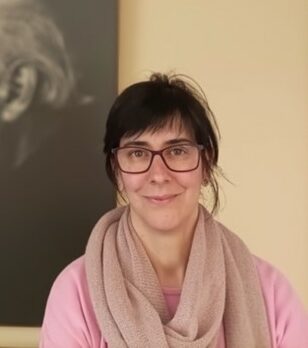
Dr Gertrudis Perea
Instituto Cajal CSIC, ES
Melanopsin for Time-Controlling Activation of Astrocyte –Neuron Networks
Optogenetics has been widely expanded to enhance or suppress neuronal activity and it has been recently applied to glial cells. Here, we will discuss about a novel approach based on selective expression of melanopsin, a G-protein-coupled photopigment, in astrocytes. We will show the selective expression of melanopsin in astrocytes allows triggering astrocytic Ca2+ signalling, but also studying astrocyte–neuron networks and the behavioral astrocytic contribution.
Bio
Dr. Perea is head of the Neuro-Glia Networks Lab at the Cajal Institute (CSIC). Our interest is focused on the study of the biological properties that govern neuron-astrocyte interactions in the Central Nervous System (CNS). We use cutting-edge techniques in Neurosciences, such as ex vivo and in vivo electrophysiology; calcium imaging techniques and optogenetic and chemogenetic approaches to unmask the specific roles of astrocytes in synaptic transmission and behavior. Our goal is to understand the contribution of astrocytes to the information processing by neural circuits and the impact that neuron-astrocyte signaling has on different brain functions, either in physiological conditions as in different brain pathologies.
 Dr Edgar Bäumler
Boehringer Ingelheim PhD Fellow
University College London, UK
Advanced all-optical approaches for investigating downstream readout of neural activity patterns
Understanding how information is transmitted between brain areas is a fundamental problem in neuroscience. Addressing this problem requires a method for measuring functional connectivity between specific ensembles of neurons in one brain area and their downstream targets in other brain areas. This would allow us to understand how specific activity patterns are decoded and transformed by downstream neurons to guide behaviour. To achieve this, we have developed a novel approach combining all-optical interrogation (2-photon imaging and 2-photon holographic optogenetics) with simultaneous Neuropixels probe recordings across multiple downstream brain areas. This allows us to photostimulate functionally defined cell ensembles while reading out the downstream impact of those manipulations with single neuron and single-spike resolution. Using this approach, we designed a stimulation paradigm to disentangle the effects of hippocampal firing rate from temporal spike order on neural activity in the lateral septum and anterior cingulate cortex. Our results demonstrate that the temporal order of optogenetically driven place cell reactivation sequences causally influences activity in the lateral septum. In the final part of the talk, I will briefly mention ongoing work using voltage imaging based all-optical interrogation aimed at revealing the cellular mechanisms that might underly such sequence readout. These novel strategies enable powerful experiments to probe how information is processed across distributed brain areas during behaviour.
Bio
Dr Edgar Bäumler is currently Boehringer Ingelheim PhD Fellow in the laboratory of Prof. Michael Hausser.
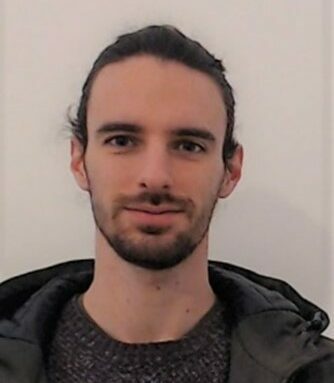 Dr Matteo Pisoni
Postdoc
Pasteur Institute, FR
Towards two-photon all-optical electrophysiology with acousto-optic scanning
Precise and efficient investigation of neuronal circuits underlying sensory perception remains to date one of the biggest challenges in neuroscience. Currently, two-photon (2P) microscopy is considered the state-of-the-art technique to record and simultaneously perturb with high spatial resolution the activity of large populations of neurons, combined in a so-called all-optical strategy. Since the recent development of several genetically encoded voltage indicators (GEVIs), the possibility to optically access and manipulate the sub- and supra-threshold electrical activity of neurons emerges. Along with it, imaging strategies suitable for recording electrical signals without compromising spatial resolution have been developed. ULoVE is an ultrafast high signal-to-noise ratio technique, validated for 2P voltage imaging in vivo [1]. In this framework, similarly spatiotemporally accurate 2P optogenetic manipulation is lacking. I tested ultrafast and spatially precise stimulation (based on ULoVE) of multiple neurons in vivo, combining femtosecond lasers and an AOD-based microscope. These results demonstrate the feasibility of stimulating neuronal ensembles with unprecedented temporal resolution, matching kinetics and latency of physiological electrical signals. Toward performing 2P all-optical electrophysiology, I also implemented 2P chronic voltage imaging, expressing JEDI-2P [2] in L2/3 neurons in mouse auditory cortex.
Bio
I studied at University of Milan, where I obtained the bachelor degree in Biological Science in 2016 and the master degree in Molecular biology of the cell in 2018. My master thesis project was carried out in Prof. Anna Moroni’s lab, where I focused on the biophysics of ion channels, studying structure-function relationship in HCN channels. For my PhD, I moved to the Italian Institute of Technology (Genoa, Italy) in Dr. Tommaso Fellin’s team. There I worked on a project focused on the development of a strategy to perform high-efficiency two-photon all-optical imaging and manipulation of neuronal circuits in vivo, with limited crosstalk. After PhD defense, I decided to join the research unit lead by Dr. Brice Bathellier at the Institut de l’Audition (Pasteur Institute). I am currently employing cutting edge optical techniques to monitor and manipulate ensembles of neurons with exquisite spatiotemporal resolution, which will be applied auditory perception in mice.